- 发行说明
- 入门指南
- 安装
- 配置
- 集成
- 身份验证
- Working with Apps and Discovery Accelerators
- AppOne 菜单和仪表板
- AppOne 设置
- TemplateOne 1.0.0 菜单和仪表板
- TemplateOne 1.0.0 设置
- TemplateOne menus and dashboards
- TemplateOne 2021.4.0 设置
- Purchase to Pay Discovery Accelerator 菜单和仪表板
- 购买到付款 Discovery Accelerator 设置
- Order to cash Discovery Accelerator 菜单和仪表板
- “订单到现金” Discovery Accelerator 设置
- Basic Connector for AppOne
- SAP Connectors
- 适用于 AppOne 的 SAP 订单到现金连接器
- 适用于 AppOne 的 SAP 采购到付款连接器
- SAP Connector for Purchase to Pay Discovery Accelerator
- SAP Connector for Order-to-Cash Discovery Accelerator
- Superadmin
- 仪表板和图表
- 表格和表格项目
- 应用程序完整性
- How to ....
- 使用 SQL 连接器
- Introduction to SQL connectors
- Setting up a SQL connector
- CData Sync extractions
- Running a SQL connector
- Editing transformations
- 释放 SQL 连接器
- Scheduling data extraction
- Structure of transformations
- Using SQL connectors for released apps
- Generating a cache with scripts
- Setting up a local test environment
- Separate development and production environments
- 实用资源
在 Process Mining 独立版中设置可操作的 Insights,用于将 Process Mining 连接到 UiPath Orchestrator,以根据流程智能触发人员或机器人。
简介
UiPath Action Center是跟踪和监控复杂业务流程、任务、人员和机器人的中央门户。您可以将UiPath Process Mining连接到UiPath Orchestrator ,以根据 Process Mining 的见解触发人员或机器人。您可以使用触发器为机器人添加队列事务,或通过UiPath Action Center中的操作向人员发出警示。本指南介绍如何连接UiPath Orchestrator以启用Actionable Insights 。
下载
先决条件
假设您已经:
- 已下载并提取Actionable Insights.zip文件。
- 在UiPath Process Mining服务器上(以管理员身份)安装了Python和以下Python包:
- 请求,
- json,
- python-dotenv。
- 访问UiPath Cloud Orchestrator Cloud 或On-Prem Orchestrator ;
- 访问服务器上的UiPath Process Mining安装文件夹;
- downloaded the latest version of the app or Discovery Accelerator for which you want to set up Actionable Insights.
- 了解UiPath Orchestrator和UiPath Action Center 。
重要提示:
如果您在内部部署中使用UiPath Orchestrator ,建议在其他服务器上安装UiPath Process Mining 。
步骤 1:连接 UiPath Orchestrator
应用程序或 Discovery Accelerator 安装包中的Actionable Insights文件夹包含连接到UiPath Orchestrator所需的文件。
请按照以下步骤连接UiPath Orchestrator 。
| 步骤 | 操作 |
|---|---|
| 1 | 转到UiPath Process Mining安装 <PLATFORMDIR> 的根文件夹,并创建子文件夹orchestrator 。请参见下图。 |
| 2 | 将以下文件复制到子文件夹orchestrator 。
请参见下图。 |
| 3 | 将.env文件重命名为为其设置连接的租户的名称。例如,如果租户为“默认” ,则必须将UiPath Orchestrator配置文件重命名为Default.env 。请参见下图。 |
| 4 | 请确保在 [tenant].env 配置文件中设置和/或添加设置,如下所述。 |
使用 UiPath Orchestrator 的设置
为UiPath Orchestrator进行以下设置。
-
ORCH_INSTANCE_TYPE = 1如果您的UiPath Orchestrator是本地部署的,则为ORCH_INSTANCE_TYPE = 2如果您的UiPath Orchestrator位于云中。 -
ORCH_URL = [url](Orchestrator URL 中包含租户名称的部分,请参见下图) -
ORCH_APP_ID = [*App ID*] -
ORCH_APP_SECRET =[*App secret*]
应用程序 ID 和应用程序密码
要获取应用程序 ID 和应用程序密码,您必须将Process Mining添加为 UiPath Platform 的外部应用程序。注册后, Process Mining可以对 UiPath Orchestrator 进行 API 调用,以访问操作和队列。
请按照以下步骤将Process Mining注册为外部应用程序。
| 步骤 | 操作 |
|---|---|
| 1 | 在Automation Cloud中,单击菜单中的“管理”选项,然后转到“外部应用程序” ,或者在租户主机上,转到“设置”-“安全”-“外部应用程序” 。 |
| 2 | 单击“ + 添加应用程序” 。 |
| 3 | 在“应用程序名称”字段中输入名称,例如Process Mining 。 注意: “重定向 URL”字段是可选的,可以留空。 |
| 4 | 确保选择机密应用程序作为“应用程序类型” 。 |
| 5 | 单击“添加作用域” 。 系统将显示“编辑资源”面板。 |
| 6 | 从“资源”下拉列表中选择“Orchestrator API 访问” 。 |
| 7 | 在“应用程序作用域”选项卡上,选择“OR.Tasks”和“OR.Queues” 。 单击“保存”。 |
| 8 | 单击“添加”以添加应用程序。 |
系统将显示一个弹出对话框,其中显示应用程序 ID和应用程序密码。有关示例,请参见下图。
步骤 2:设置工作区
请按照以下步骤为Actionable Insights设置工作区。
| 步骤 | 操作 |
|---|---|
| 1 | 转到“超级管理员工作区”选项卡,然后为您的应用程序或 Discovery Accelerator 选择工作区。 |
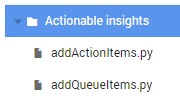
| 2 | 创建新文件夹Actionable Insights 。 |
| 3 | 将以下文件上传到Actionable Insights文件夹:
请参见下图。 |